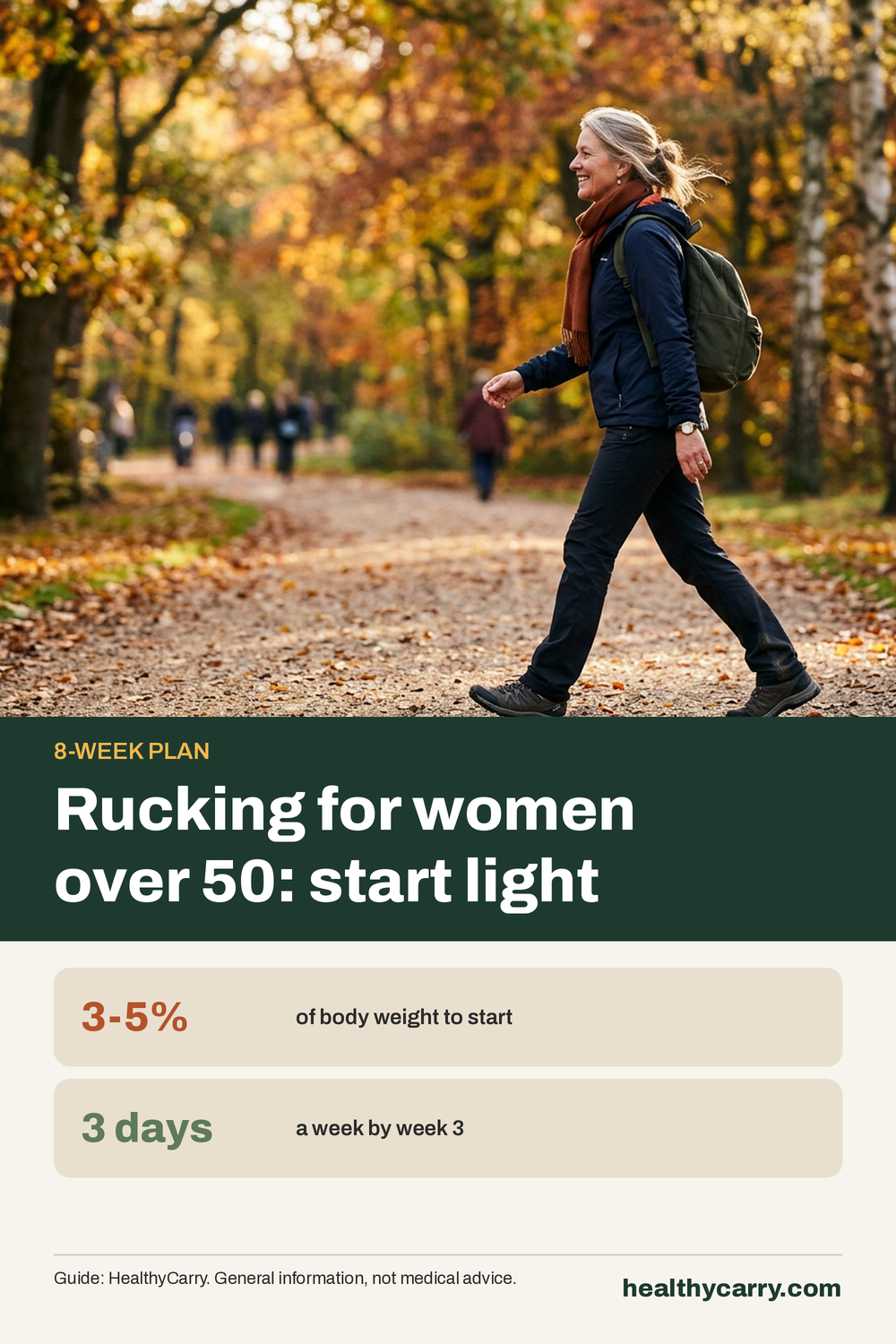
Rucking is everywhere, and most advice is written for 25-year-old soldiers. If you’re a woman over 50, the real questions are different: how much weight, how often, and will my knees, back and bones thank me? This 8-week plan starts lighter than you think.
Quick answer: Rucking for women over 50 means walking briskly with a light, well-fitted pack. Start with 3-5% of your body weight (or an empty pack), walk 20-30 minutes, 2-3 days a week, and add about 1-2 lb or a few minutes every week or two. Pair it with two strength sessions. Stop for sharp pain, and check with your doctor first.
Is rucking good for women over 50?
It can be a practical fit: it is walking, which most people can start today, plus a load that asks a bit more of your legs, hips and back. The U.S. Physical Activity Guidelines for adults recommend at least 150 minutes of moderate activity a week plus muscle-strengthening on 2 or more days. Rucking can cover part of both, but it is not a replacement for real strength work. No trial shows rucking prevents fractures or cures anything; we won’t promise that.
How much weight should a woman over 50 start with?
Start with an empty pack for a week, then add weight slowly. As a practical rule of thumb (not a trial result): beginners stay around 3-5% of body weight, and many people never need more than 10%. Use the ruck weight calculator to see your numbers.
| Body weight | Weeks 1-2 (3%) | Weeks 3-5 (5%) | Weeks 6-8 (up to 8%) |
|---|---|---|---|
| 130 lb | 4 lb | 6.5 lb | 10 lb |
| 150 lb | 4.5 lb | 7.5 lb | 12 lb |
| 170 lb | 5 lb | 8.5 lb | 13.5 lb |
| 190 lb | 5.5 lb | 9.5 lb | 15 lb |
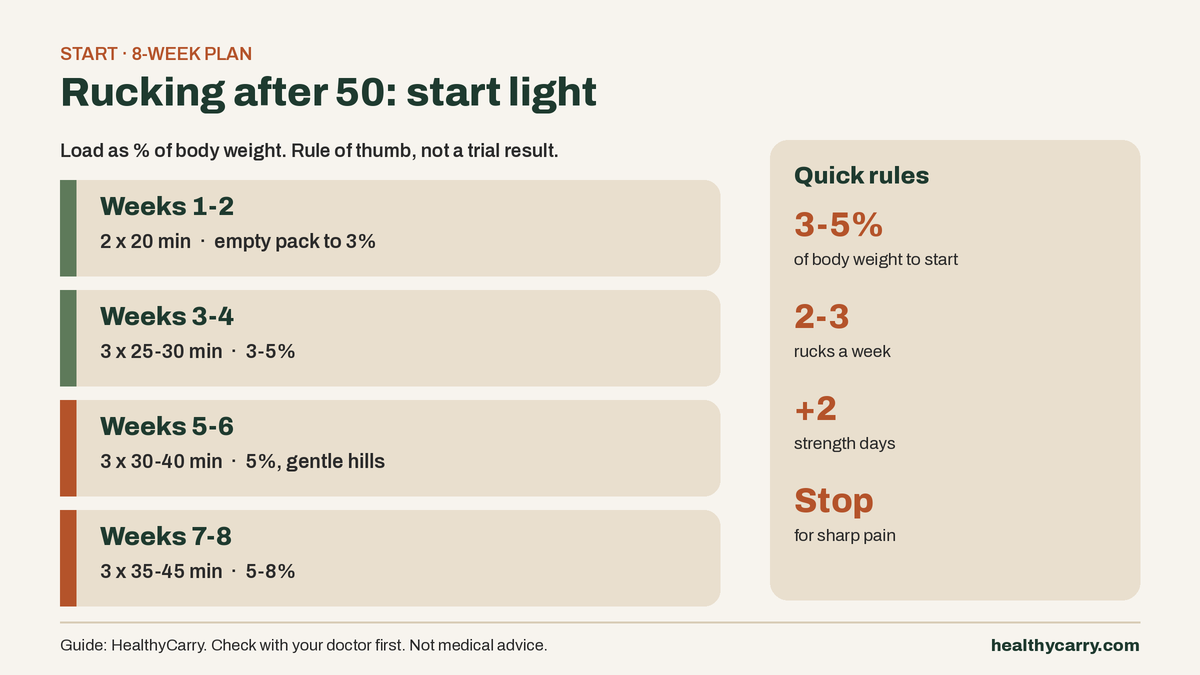
What is a good 8-week rucking plan for beginners over 50?
| Weeks | Rucks per week | Time | Load | Focus |
|---|---|---|---|---|
| 1-2 | 2 | 20 min | Empty pack to 3% | Posture, pack fit, easy pace |
| 3-4 | 3 | 25-30 min | 3-5% | Brisk but able to talk |
| 5-6 | 3 | 30-40 min | 5% | Add gentle hills or stairs |
| 7-8 | 3 | 35-45 min | 5-8% | One longer ruck, keep others easy |
Take a rest day between rucks. If a week feels hard, repeat it. Progress by one thing at a time: time or weight, not both.
What strength work should go with it?
Two short sessions a week: sit-to-stands, step-ups, a farmer’s carry with a light dumbbell in each hand, and a row. Our farmer’s carry guide shows how to pick the weight. A recent trial in women 50-70 found fast, controlled lifting linked to hip density (see the study); that is early evidence, so just treat it as a reason to move with intent.
How do I fit a pack so it doesn’t hurt?
- Pack sits high and close to your back, with the heaviest items near your shoulder blades.
- Hip belt snug if the pack has one; sternum strap clipped.
- Use a snug daypack, not a loose bag. A weighted vest is another option; check bust and short-torso fit first.
- Walk with an upright chest and short, quick steps. See rucking and knees.
Safety: Talk to your doctor before starting if you have osteoporosis, a past fracture, heart or blood pressure issues, joint replacements, or balance problems. Stop and rest for chest pain, dizziness, sharp joint pain or numb arms. This is general information, not medical advice.
How fast should I walk?
Brisk, but you can still speak in sentences. See the pace calculator and calorie calculator. Hills and cooler weather count as effort too.
FAQ
Is rucking safe for women over 50?
For many healthy people, yes, if you start light and build slowly. Check with your doctor if you have bone, joint, heart or balance concerns.
How many days a week should I ruck?
Two to three days a week with a rest day between is a sensible start.
How heavy should my pack be?
Start empty or around 3-5% of body weight. Many people stay under 10%.
Does rucking build bone?
Walking has been linked to better hip and spine density in a large BMJ review, but there is no rucking-specific fracture trial. Strength training matters too.
Can I ruck with a weighted vest instead of a pack?
Yes, if it fits well. Check fit around the bust and torso, and start with a light load.
Will rucking help with weight loss?
It burns more calories than walking without load, but diet and consistency matter most. Try the calorie calculator for an estimate.
Want the easy version?
Get the free 4-week Start Carrying plan – one short email a week, no hype.
Sources
- U.S. Department of Health and Human Services. Physical Activity Guidelines for Americans, 2nd edition, 2018. health.gov
- Caliskan O, et al. Ballistic and conventional resistance training in postmenopausal women, Bone 2026. doi.org
- HealthyCarry calculators and guides: weight, start rucking. Load percentages here are practical rules of thumb, not trial results.