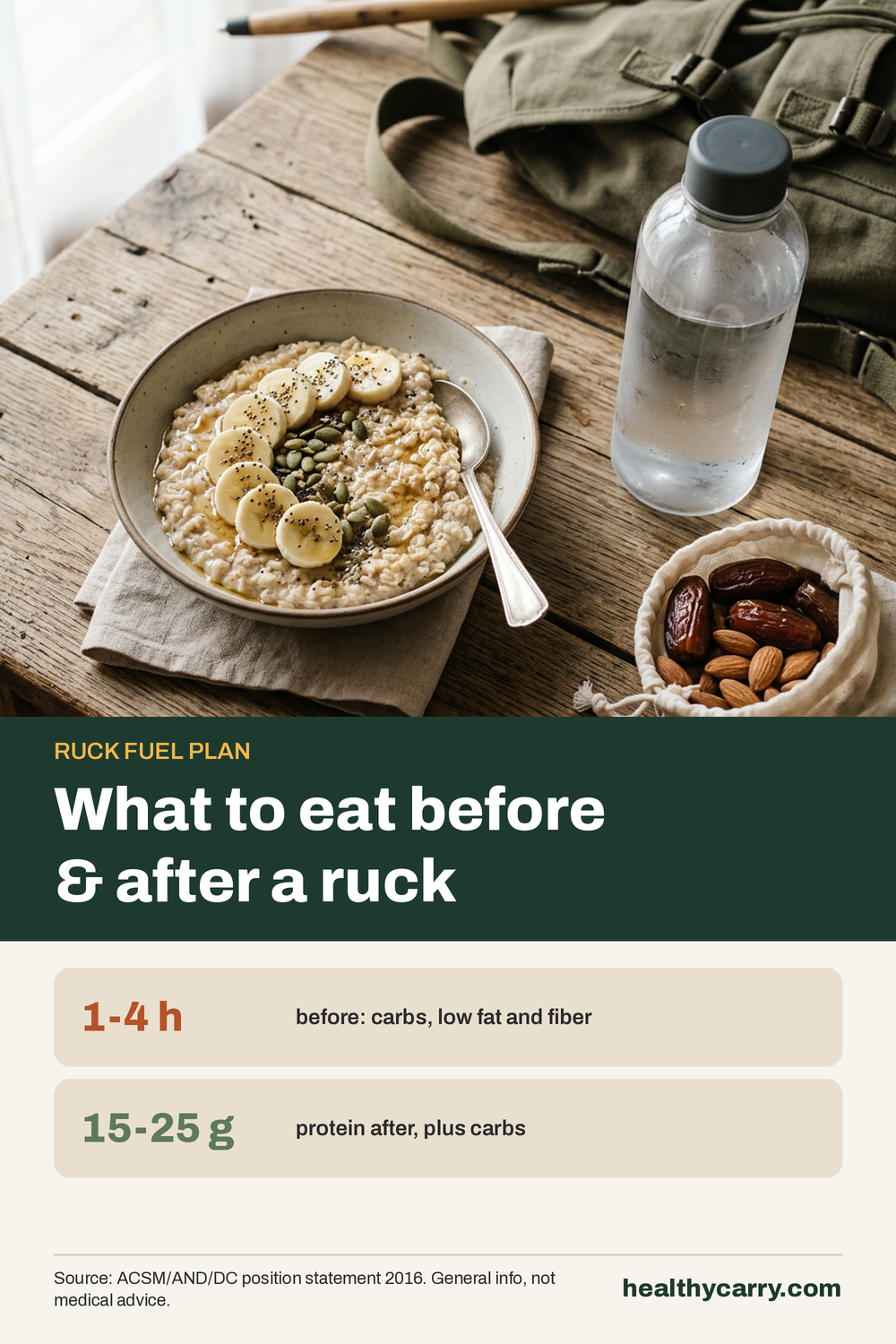
You don’t need a sports dietitian to ruck, but a bad snack at the wrong time can turn a good walk into a gurgling, light-headed one. Here is a simple before-and-after plan, based on a major sports nutrition position statement, scaled down for ordinary adults carrying a pack.
Quick answer: For a ruck under about an hour, eat normally and drink water. For longer rucks, a low-fat, low-fiber, carb-led meal or snack 1-4 hours before works well, and afterward aim for roughly 15-25 g of protein plus carbs and fluids. The numbers come from the 2016 joint position statement of the Academy of Nutrition and Dietetics, Dietitians of Canada and the American College of Sports Medicine, which is written for athletes, so treat them as a starting point.
What should you eat before a ruck?
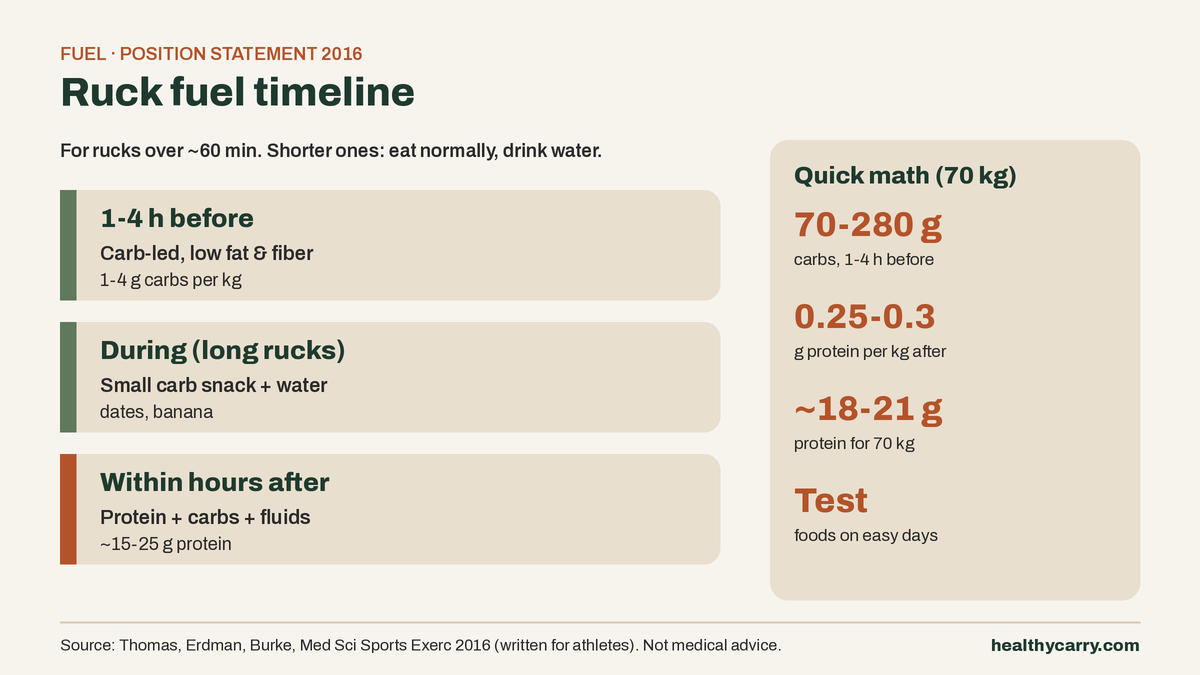
The position statement suggests 1-4 g of carbohydrate per kg of body weight, eaten 1-4 hours before exercise lasting longer than 60 minutes. It also says foods low in fat, fiber and moderate in protein are the usual choice, because they’re less likely to upset your stomach.
| Time before | Idea | Why |
|---|---|---|
| 3-4 hours | Oatmeal with banana, or rice with eggs and a little veg | Room for a fuller carb meal to digest |
| 1-2 hours | Toast with honey or jam, yogurt with fruit, a small bowl of cereal | Easy carbs, low fat and fiber |
| 30-60 minutes | A banana, a few dates, or a small handful of pretzels | Quick carbs if you feel empty |
Example: someone who weighs 70 kg (154 lb) planning a long ruck would land between 70 and 280 g of carbs across the 1-4 hour window by that formula. Most people are comfortable at the low end for a casual walk. Practice in training, never on a big day.
Do you need to eat during a ruck?
For a ruck under an hour, usually water is enough. For longer ones, carrying a small carb snack such as dates, a banana or a plain bar can help you keep a steady pace. The same position statement lists higher carbohydrate targets only for much longer endurance efforts, so most weekend ruckers can stay simple. Drink to thirst and more in heat. If you have a medical condition, ask your clinician how to fuel.
What should you eat after a ruck?
The statement recommends early intake of high-quality protein of about 0.25-0.3 g/kg body weight, which works out to roughly 15-25 g for most adults. Carbs help restock the energy you used, particularly if you’ll train again within about 8 hours (the statement gives 1-1.2 g/kg/hour for the first 4 hours in that situation). Otherwise, your next normal meal does the job.
| After-ruck plate | Protein (approx.) |
|---|---|
| Greek yogurt, berries, and oats | 15-20 g |
| Eggs, toast and fruit | 15-20 g |
| Chicken or tofu, rice and vegetables | 20-30 g |
| Milk-based smoothie with banana | 10-20 g |
Protein amounts are rough and vary by brand and portion; check the label.
Common mistakes
- Trying something new on a long day. Test foods on easy rucks first.
- Heavy, greasy or very high-fiber meals right before. They sit longer and can cause cramps.
- Skipping food because you want to burn calories. Our rucking calorie calculator shows effort is modest on short walks. Under-fueling can make you dizzy and sloppy with a pack on.
- Forgetting protein later in the day. If you’re building strength after 40, see our beginner rucking guide and keep protein steady across meals.
What does this not cover?
This is general guidance drawn from a position statement aimed at athletes. It isn’t personalized, and it doesn’t cover pregnancy, diabetes, kidney disease or eating disorders. We’re not recommending any supplement or product here.
Safety first: If you take medicine for diabetes or blood pressure, or have a medical condition that affects eating or hydration, ask your clinician or a registered dietitian how to fuel for exercise. Stop and rest if you feel faint, nauseated or unusually breathless. General information, not medical advice.
Get the free 4-week Start Carrying plan: a printable plan with a weekly log, so your next few weeks are easy to track.
Sources
- Thomas DT, Erdman KA, Burke LM. “Position of the Academy of Nutrition and Dietetics, Dietitians of Canada, and the American College of Sports Medicine: Nutrition and Athletic Performance.” Med Sci Sports Exerc 2016;48(3):543-568. journals.lww.com
- Same statement, Dietitians of Canada PDF: dietitians.ca