
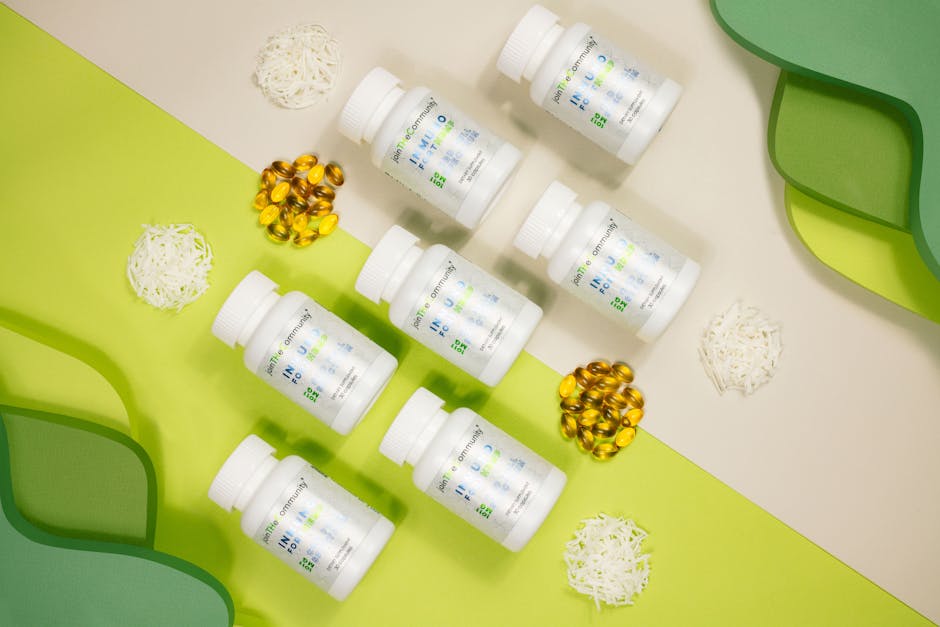
The best vitamin D supplement is not automatically the product with the largest number on the front label. A useful choice starts with a clearly stated form and amount, a simple ingredient list, credible manufacturing controls, and a format you can take consistently. Your personal need for a supplement—and the amount that is appropriate—depends on factors that a product roundup cannot determine.
This guide explains how to compare vitamin D products without treating marketing claims as medical evidence. It is written for US readers and uses guidance from the National Institutes of Health (NIH) and the US Food and Drug Administration (FDA). See how HealthyCarry selects and verifies sources.
What vitamin D actually does
Vitamin D is a fat-soluble vitamin that helps the body absorb calcium and maintain the calcium and phosphate concentrations required for normal bone mineralization. It also participates in neuromuscular and immune function. Those biological roles do not mean that taking progressively larger supplemental amounts produces progressively better health.
The NIH identifies serum 25-hydroxyvitamin D, written as 25(OH)D, as the main indicator used to assess vitamin D status. Interpretation is not as simple as a universal “optimal” number: assays vary, health context matters, and professional organizations do not use identical thresholds. Routine population-wide testing is not recommended for every healthy person.
Vitamin D2 versus D3
Supplement labels usually list one of two forms:
- Vitamin D2 (ergocalciferol), traditionally produced from fungal or yeast sources.
- Vitamin D3 (cholecalciferol), traditionally sourced from lanolin, although vegan D3 made from lichen is also available.
Both forms are absorbed in the small intestine and can raise vitamin D status. D3 often maintains circulating 25(OH)D more effectively in comparative research, which is why it is common in general-purpose supplements. A vegan label should identify the actual source rather than relying only on a leaf icon or the word “natural.”
How much is on the label?
US labels may express vitamin D in micrograms (mcg), International Units (IU), or both. The conversion is:
1 mcg vitamin D = 40 IU.
NIH reference intakes for healthy people are designed for nutritional adequacy, not for treating a diagnosed deficiency. The Recommended Dietary Allowance is 15 mcg (600 IU) for adults ages 19–70 and 20 mcg (800 IU) for adults older than 70. These reference values include intake from food and supplements.
A front label displaying 5,000 or 10,000 IU should not be interpreted as evidence that the product is higher quality. High-amount products can have legitimate clinical uses, but that decision belongs in an individualized plan. Vitamin D can accumulate because it is fat soluble, and excessive intake can cause serious adverse effects.
Our vitamin D comparison framework
HealthyCarry does not claim to have laboratory-tested a product unless a documented test was actually commissioned. We use the following transparent criteria when assessing a label.
| Criterion | What to look for | Why it matters |
|---|---|---|
| Form | D2 or D3 stated clearly; source disclosed when vegan status matters | Lets you understand what you are buying instead of relying on front-label imagery |
| Amount | mcg and/or IU per serving, with an unambiguous serving size | Prevents confusion between one drop, one capsule, and a multi-unit serving |
| Ingredient list | Short list without unnecessary proprietary blends | Makes allergens, carriers, sweeteners, and additives easier to evaluate |
| Quality verification | Current, verifiable USP, NSF, or comparable independent certification where available | Can provide additional assurance about defined identity or manufacturing criteria |
| Traceability | Lot number, expiration date, manufacturer contact information, and intact packaging | Supports recall checks and product-specific questions |
| Value | Price per actual serving, not bottle price alone | A larger bottle is not always less expensive per comparable serving |
Best format by practical need
Best simple option: a single-ingredient D3 capsule or softgel
A clearly labeled capsule or softgel is easy to compare, portable, and less vulnerable to measuring mistakes than an unclear liquid dropper. Some softgels use oil as a carrier because vitamin D is fat soluble. Check gelatin and other capsule ingredients if vegan, vegetarian, religious, or allergy requirements apply.
Best vegan option: D2 or lichen-derived D3 with source disclosure
D2 is generally vegan, while many D3 products are lanolin-derived. Lichen-derived D3 offers another option, but the source should appear in the ingredient information. “Plant-based” on the front of a package is not enough if the capsule or other ingredients are not also compatible with your requirements.
Best flexible format: a liquid with precise serving instructions
Liquids can be useful when swallowing capsules is difficult. The label should state whether the serving is one drop, a full dropper, or a measured volume. Droppers that do not provide clear graduations can make consistent use harder. Keep the bottle according to its storage instructions and avoid touching the dropper to the mouth.
Best for people avoiding extra sugar: an unsweetened capsule or drop
Gummies can be convenient, but serving size, added sugar, texture, and storage stability vary. Compare the Supplement Facts panel and ingredient list rather than assuming a gummy and a capsule with similar front-label claims are equivalent.
What independent certification can—and cannot—tell you
Independent certification may evaluate defined issues such as ingredient identity, manufacturing practices, or contaminants. It does not prove that a supplement prevents disease, works for every person, or is appropriate alongside every medication.
Verify a certification in the certifier’s own directory when possible. A symbol printed on a marketplace image is not the same as a current listing. Also check the exact product and formulation; certification of one product from a brand does not automatically cover the brand’s entire catalog.
FDA regulation and marketing claims
Dietary supplements are regulated differently from drugs in the United States. The FDA does not approve dietary supplements for safety and effectiveness before they are sold in the way it approves new drugs. Manufacturers and distributors are responsible for marketing compliant products, and the FDA can take action when products are unsafe, adulterated, misbranded, or otherwise violate the law.
Be cautious when a seller describes a vitamin D product as a cure, guaranteed immune defense, or replacement for prescribed care. The FDA advises consumers not to assume that “natural” means safe and to be skeptical of claims that sound too good to be true.
Who should get individualized advice first?
Discuss vitamin D use with a clinician or pharmacist if you have a diagnosed deficiency, kidney or parathyroid disease, a condition affecting fat absorption, a history of kidney stones, osteoporosis treatment, pregnancy, a planned procedure, or medications that may interact with supplements. Older adults, people with limited sun exposure, people with darker skin, and people with malabsorption conditions are among the groups more likely to have inadequate status, but membership in a risk group does not determine an individual dose.
Review every source of vitamin D you use, including multivitamins, calcium combinations, fortified foods, and separate vitamin D products. Duplicate products are an easy way to underestimate total intake.
Does vitamin D “boost” immunity?
Vitamin D participates in normal immune function, but that fact is often stretched into a marketing promise. The NIH concludes that evidence for many health outcomes outside established roles such as bone health is incomplete, inconsistent, or dependent on the population studied. A supplement should not be marketed or used as a substitute for vaccination, medical treatment, sleep, nutrition, or other established preventive measures. Our guide to supporting normal immune function explains those foundations without “boost” claims.
A five-minute label checklist
- Confirm the form: D2 or D3.
- Read the amount per serving in mcg or IU and confirm the serving size.
- Add vitamin D from other supplements you already use.
- Review inactive ingredients and allergen information.
- Verify any certification in the certifier’s directory.
- Check the lot, expiration date, seal, seller, and recall information.
- Ask a clinician or pharmacist when health conditions or medications make the choice less straightforward.
Frequently asked questions
Is D3 always better than D2?
Both forms can raise vitamin D status. D3 often produces a larger or more sustained change in comparative studies, but source preference, availability, prescribed treatment, and individual context can affect the choice.
Should every adult take vitamin D?
No single recommendation fits every adult. Food intake, fortified foods, sun exposure, age, health conditions, and laboratory findings may affect the decision. NIH reference intakes describe nutritional requirements for healthy populations; they are not personalized prescriptions.
Is a higher-IU product better value?
Not necessarily. Value should be judged against an appropriate use, transparent quality information, and cost per relevant serving. An unnecessarily high amount is not a bargain.
Can a supplement replace testing or medical care?
No. Supplements cannot diagnose why a level is low, identify an absorption problem, or account for medication interactions. Seek professional advice when symptoms, risk factors, or an existing diagnosis are involved.
Primary sources
- NIH Office of Dietary Supplements: Vitamin D Fact Sheet for Health Professionals
- US Food and Drug Administration: FDA 101—Dietary Supplements
- US Food and Drug Administration: Dietary Supplements
Last evidence review: June 23, 2026. HealthyCarry will update this guide when material NIH or FDA guidance changes. Read our Editorial Policy for correction and update standards.
